
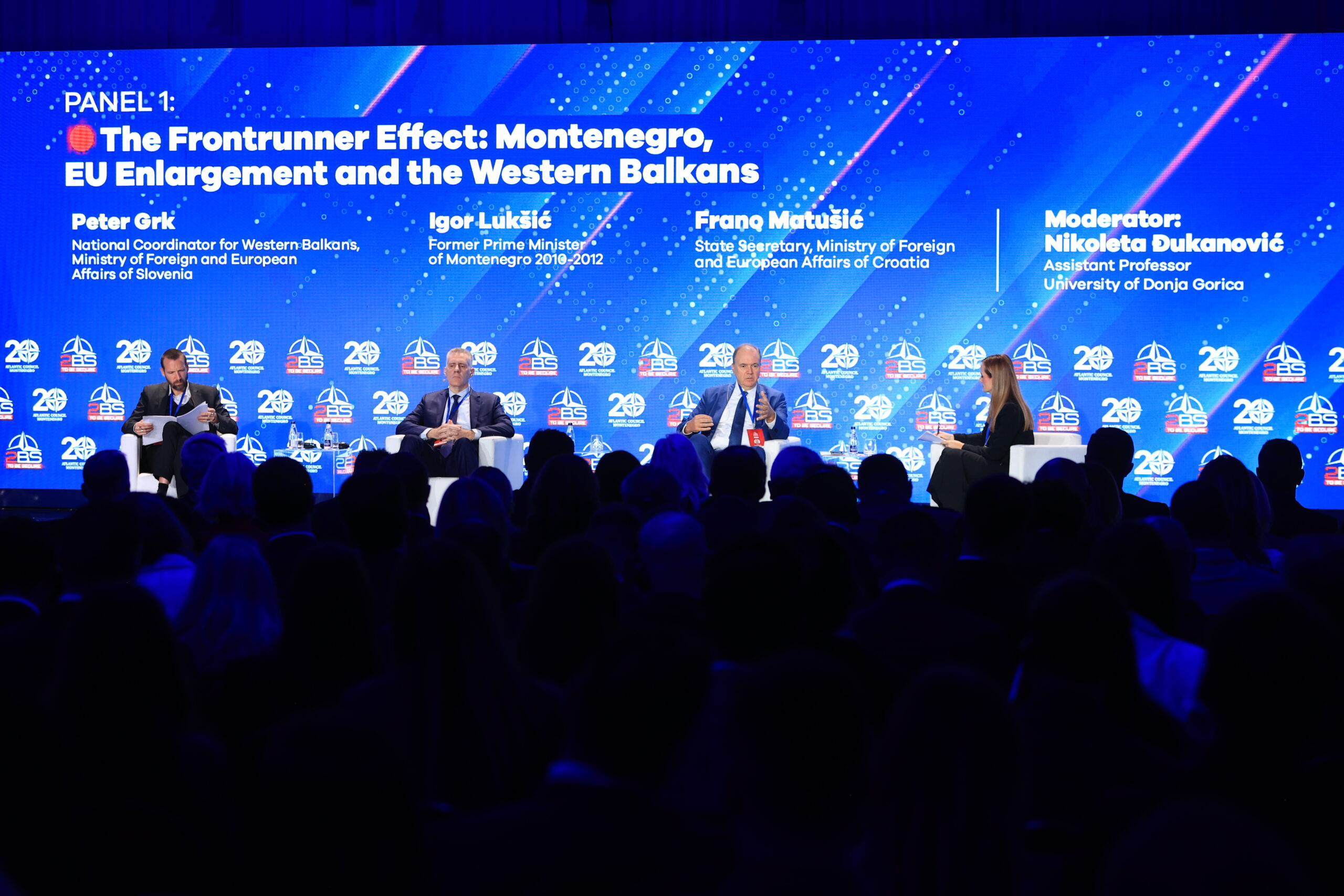
Montenegro must fulfil its remaining obligations and demonstrate its readiness for EU membership, while its accession to the European Union would send an important message that enlargement is possible and that the Western Balkans has a European future, participants said at the panel entitled “The Front-Runner Effect: Montenegro, EU Enlargement and the Western Balkans.”
Panel participants assessed that enlargement is an important instrument for preserving peace, stability and security in Europe, but also stressed that the path to membership requires concrete results, institutional reforms and consistent respect for European values. As the European Union grapples with questions about its own readiness to admit new members, Montenegro, they said, must fulfil its obligations under the accession negotiations while establishing a clear consensus on fundamental European principles, including the rejection of genocide denial and the glorification of war criminals.
Peter Grk, National Coordinator for the Western Balkans at Slovenia’s Ministry of Foreign and European Affairs, assessed that the European Union is not yet ready for enlargement in general, but is ready to enlarge to include Montenegro.
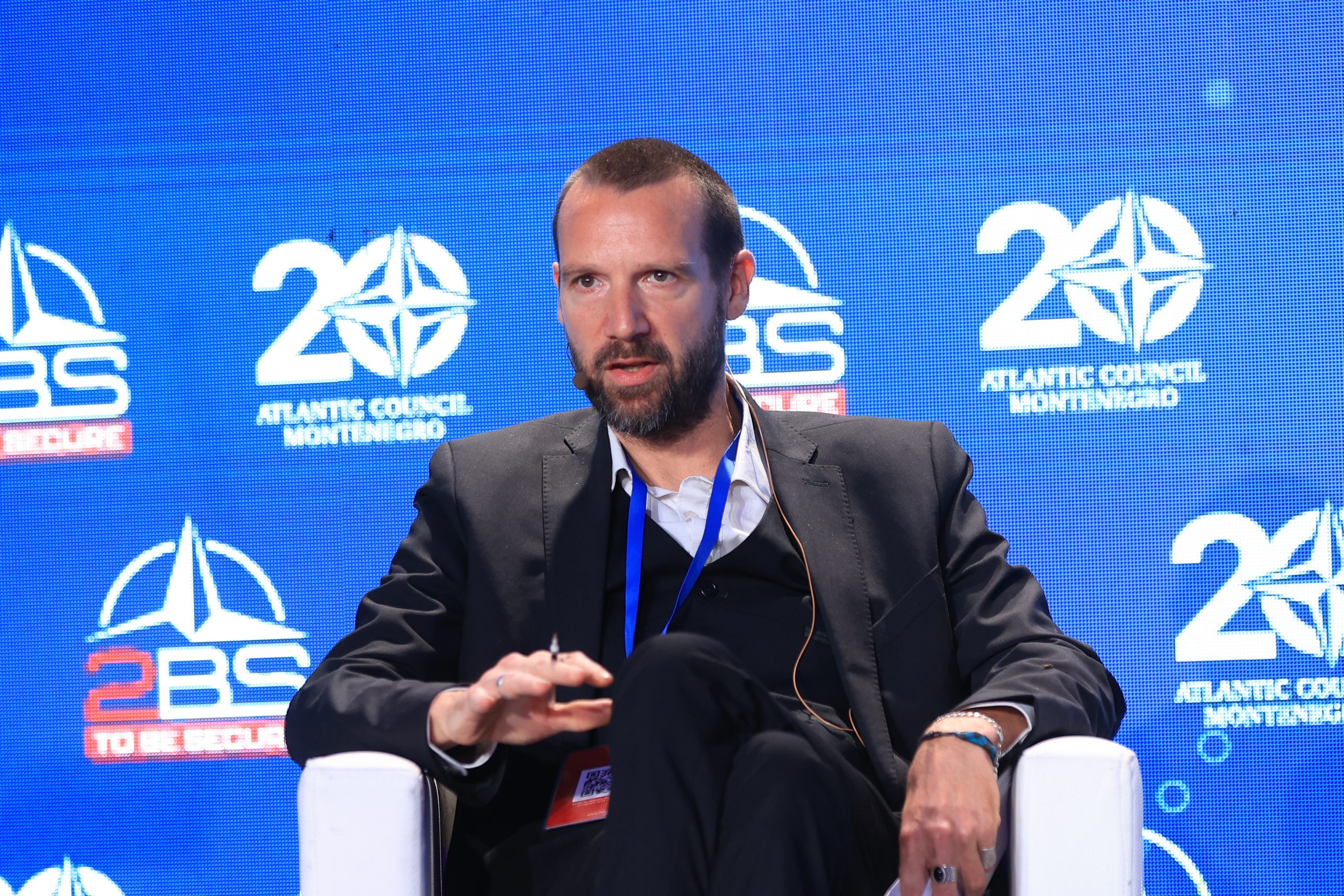
“Allow me to explain that a little further. I think this is a kind of European dilemma. This is precisely why we have built such a complex and developed European Union infrastructure. We live in a very unstable world. The entire multilateral system is under pressure. We once again have war on European soil, Russia’s aggression against Ukraine, while the European Union continues to face numerous internal issues. This is entirely understandable, because resolving them takes time. When 27 countries have to reach agreement on certain issues, it is clear that the process requires time,” Grk said.
Speaking about enlargement policy, Grk noted that over the past two decades the European Union had sought to keep the issue on its agenda despite numerous challenges.
According to him, changes in the international environment have further reinforced awareness of the need to consolidate the European project.
“If we fail to do so, we will not get very far. We will find ourselves caught between the competing interests of major powers, and that is a situation we should avoid,” Grk said.
He assessed that enlargement, one of the most important instruments for preserving peace and stability in Europe, is once again becoming a focus for the European Union. Nevertheless, he noted that numerous questions remain open regarding the Union’s future functioning. These include the institutional changes needed to enable the EU to operate effectively with 34 or 35 member states, as well as how Ukraine’s membership and that of other candidate countries would fit into the process.
“Within the European Union, there is an ongoing reassessment of how to move forward. This process has only just begun, and we do not yet have concrete answers,” Grk said.
He added that the European Commission had prepared documents addressing the institutional changes required to make the Union ready for enlargement. However, many of these issues are highly complex, particularly if a larger number of new members are admitted. Grk stressed that finding answers to these challenges would take time, as they require serious debate and agreement among member states.
“EU enlargement will not happen with Montenegro being unprepared for it. Rather, Montenegro must do everything necessary to be ready so that enlargement can take place,” Grk said.
Frano Matušić, State Secretary at Croatia’s Ministry of Foreign and European Affairs, stressed that Croatia’s support for Montenegro’s European path was not in question, noting that no negotiating chapter would have been closed without Croatia’s support. Nevertheless, he said that, at this final stage of negotiations, Montenegro was expected to fulfil its remaining obligations and meet the concrete conditions required to close the chapters.
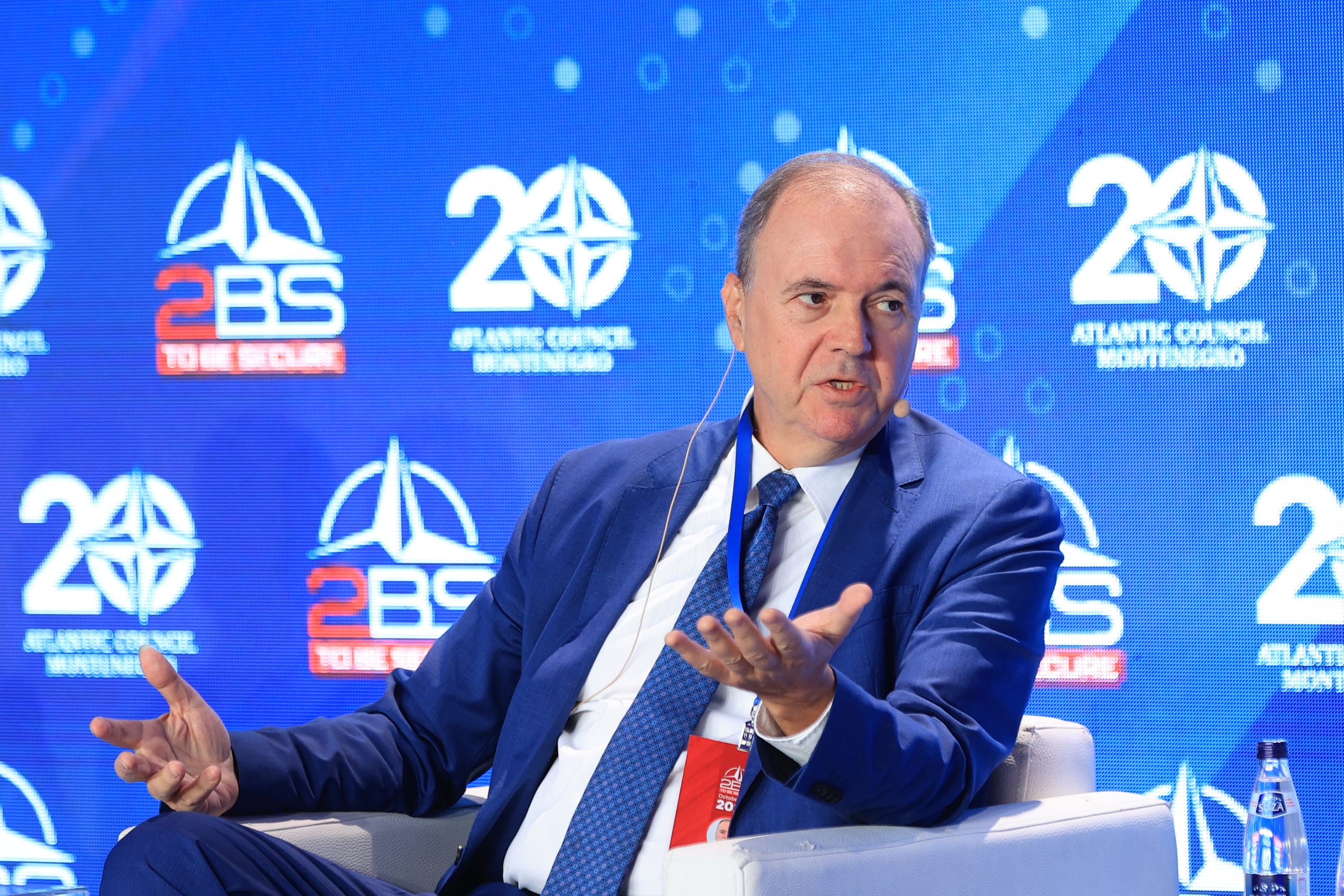
“Montenegro’s ambitions are high, but it is important to deliver the results set out in the negotiating framework. The accession process is transformative and essential to aligning the country with European standards and values,” Matušić said.
Referring to Croatia’s experience, he recalled that North Macedonia and Croatia began their European paths in 2005, while Croatia became an EU member in 2013. He noted that an unresolved issue with Slovenia had not halted Croatia’s European integration, but that a solution to the problem had to be found.
He also pointed out that North Macedonia had still not opened its negotiating chapters, partly because of the constitutional changes required of the country, including the inclusion of the Bulgarian national minority in its Constitution — a change now being demanded of North Macedonia.
According to Matušić, Croatia’s experience demonstrates the importance of reaching consensus on key issues related to European integration. He emphasised that genocide denial and the glorification of war criminals are incompatible with European values and that a clear consensus on fundamental European principles is essential.
“It is important to reach a consensus on matters that are important to the EU: glorifying a war criminal or denying genocide cannot be considered a European value,” Matušić said.
Igor Lukšić, former Prime Minister of Montenegro, assessed that Montenegro’s accession to the European Union would be important not only for the country itself but also for the Union, as it would send a powerful message that enlargement remains achievable and that the Western Balkans has a European future.
“When we talk about enlargement, the question usually arises of what the European Union gains by admitting new members. The reasons for enlargement most often relate to territory, population and resources. I am not sure which of those categories Montenegro, as a small country, would fall into, but there is no doubt that its accession would be very important for the European Union,” Lukšić said.
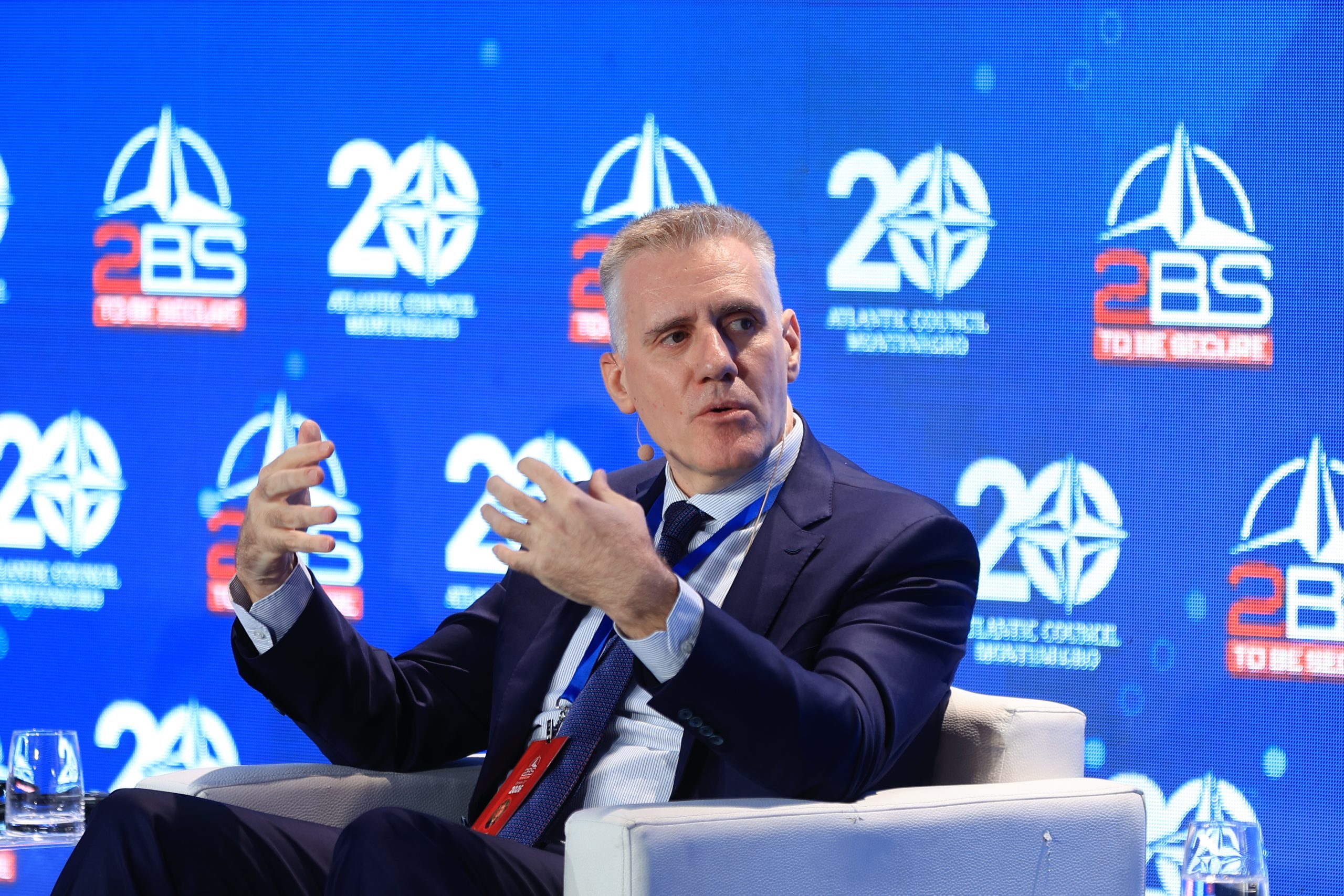
According to him, Montenegro’s membership would send a strong message that enlargement is possible, encouraging other countries in the region that aspire to join the EU. He therefore stressed the importance of continuing and completing the process as soon as possible, although it remains difficult to predict exactly how its formalisation will unfold.
Discussing the European Union’s position in international relations, Lukšić highlighted challenges relating to its competitiveness, economic potential and ability to respond to changes in the global environment. He noted that the EU is smaller today than it was ten years ago and that Montenegro’s accession alone could not compensate for all the consequences of the United Kingdom’s departure from the Union.
However, he emphasised that competitiveness is one of the key issues shaping the EU’s future, particularly in comparison with the United States. Enlargement, he said, could help expand the Union’s talent pool, resources and economic opportunities, while also changing internal dynamics.
Lukšić observed that European discussions on enlargement increasingly emphasise security considerations, similar to those that shaped the period leading up to Montenegro’s accession to NATO.
“Today, the security approach dominates, which means that the challenges we face must be addressed appropriately,” Lukšić said, adding that Montenegro’s accession would be important in changing the dynamics and narrative surrounding enlargement and that this perspective should guide the final stages of the process.
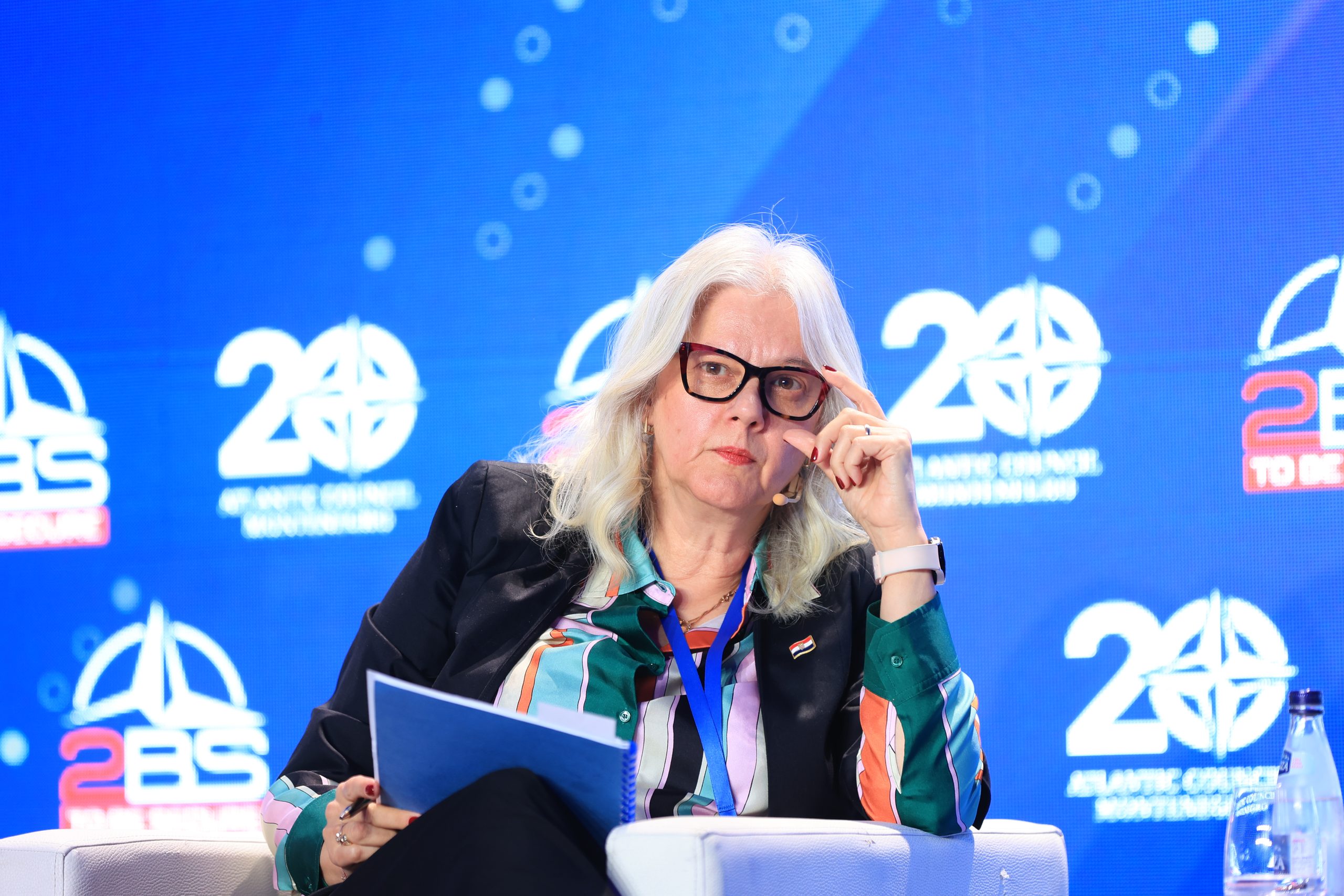
Vanda Babić Galić, Special Adviser to Croatia’s Minister of Foreign and European Affairs, said she would not want Croatia to be portrayed as a country that had imposed conditions on or blocked Montenegro, particularly because, as she stressed, it was very important to her that Montenegro become the European Union’s next member.
“I would not view Croatia as a country that blocks Montenegro, but rather as one that provides support, both through legislation and the transfer of knowledge. At least 50 experts are in Montenegro helping with the entire process. Joining the EU is not simply a tick on a checklist indicating that conditions have been met; it is a process that must be experienced by the state itself and its people. In Croatia, we all went through that journey, both through legislation and through our own development as a society, and Montenegro must go through it as well. Montenegro, not Croatia, decides how much time is needed,” Babić Galić said in a conversation with journalist Danijela Lasica during the 2BS Forum.
She said that discussions about contentious issues between the two countries had not begun yesterday, explaining that the issues had been summarised in a non-paper delivered to the foreign minister at the time in 2021.
“These are not issues intended to block Montenegro, but matters concerning fundamental values. Without addressing them, Montenegro cannot claim to have completed the process required to become part of the EU. The narrative being promoted about Croatia is untrue. Prime Minister Andrej Plenković emphasised that he had come to meet with Spajić to take a major joint step forward and accelerate Montenegro’s European path. We have now resolved two issues from the Morinj package. These are relatively easy issues to resolve,” the minister’s adviser said.
Asked whether Croatia had submitted documentation seeking two billion dollars from Montenegro, she said that the Croatian side had been requesting a meeting for a long time and that the meeting had recently taken place. She added that Montenegro was familiar with all the documents and claims presented by Croatia.
She also said that the naval training ship Jadran was merely the tip of the iceberg in the issue of military succession, involving assets that had ended up in Montenegro.
“The issue of the Jadran has not been addressed for the first time. We always reach a point where we agree to continue discussions, but the process then comes to a halt because no response comes from your side. However, the Jadran can serve as a link between our countries rather than a reason for them to grow apart,” she emphasised.