
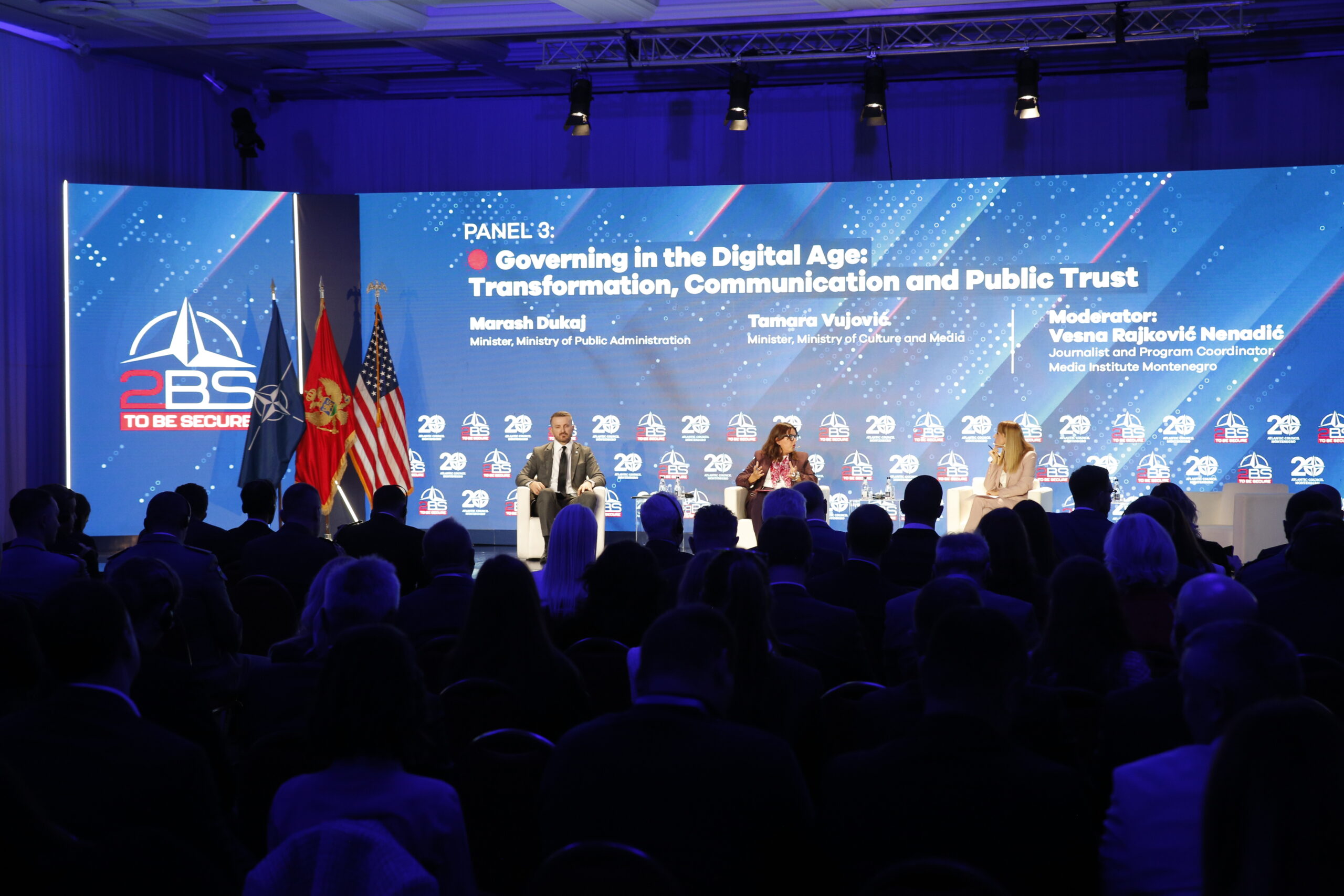
Montenegro’s Minister of Public Administration, Maraš Dukaj, said that no country in the world is completely protected from cyberattacks, stressing that cybersecurity has become the first line of national defence and that Montenegro, as a NATO member, must give it particular attention.
Speaking at the 2BS Forum panel entitled “Governance in the Digital Age: Transformation, Communication and Public Trust,” Dukaj recalled that he took office as minister in May 2022, shortly before a major cyberattack hit Montenegro in August of that year. The attack exposed numerous weaknesses in the country’s protection systems.
At the time, he said, Montenegro lacked round-the-clock protection for its information systems, legislation aligned with European Union and NATO standards, and adequately developed institutions and capabilities to protect critical infrastructure.
Dukaj noted that, with support from international partners, the Ministry of Public Administration had launched systemic reforms in cybersecurity. Among the key achievements, he highlighted the adoption of the Information Security Law and the establishment of the national, or Government, CIRT (Computer Incident Response Team), which provides 24-hour protection for state information infrastructure.
He added that work was underway to establish a Cybersecurity Agency, stressing that Montenegro had made significant progress in strengthening its resilience to cyber threats despite numerous challenges.
“The more we invest in cybersecurity, the safer we will be. The challenges are growing, but I am pleased that we have achieved tangible results in a relatively short period,” Dukaj said.
He identified the construction of a national data centre as one of the next priorities, noting that the necessary feasibility study documentation had already been prepared. He stressed that such infrastructure is essential for securely storing the data of citizens, institutions and companies, expressing hope that the project would begin as soon as possible.
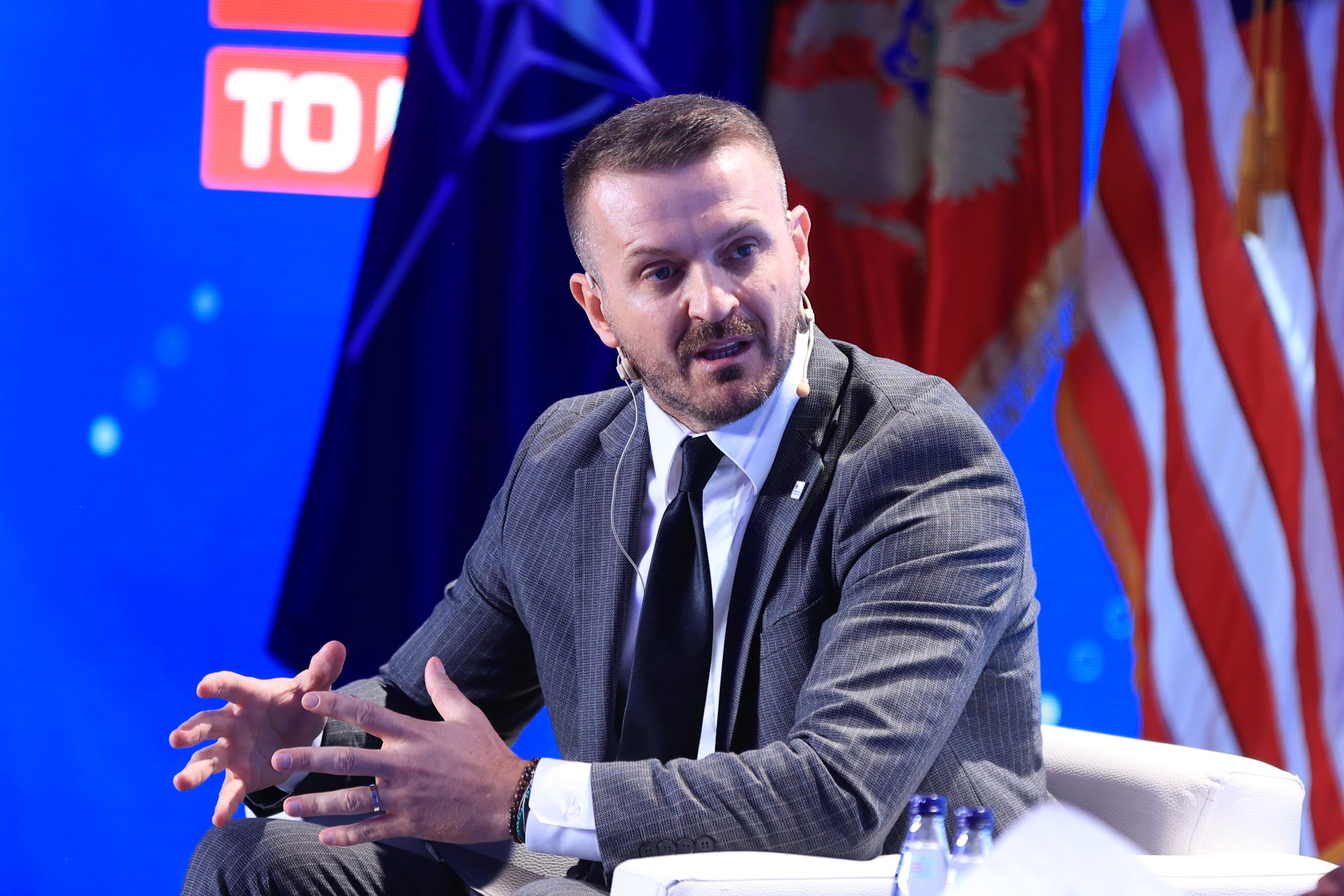
Asked whether he expected cyberattacks to intensify, Dukaj said they were happening “even as we speak.”
“These attacks will continue in the period ahead, particularly because we have elections and EU accession ahead of us. We know how much hybrid influence will focus on Montenegro. We are fortunate to have sincere partners, and we are doing our part,” the minister added.
Asked whether there had been political interference in the selection of the head of the Cybersecurity Agency, Dukaj said that “political influence is always present,” but that the intentions of international partners had been genuine.
Asked whether experts had identified the origins of the hybrid threats mentioned by the prime minister, Dukaj said he did not want to go into detail, but stressed that “we do what falls within our responsibility and remit every day.” He also said that hybrid threats were coming from neighbouring countries.
“Hybrid threats also originate from neighbouring countries. These threats occur all the time, particularly during this period, and they will increase further because we have two key events ahead: elections, which I hope will be held on a single day, and EU accession,” Dukaj reiterated.
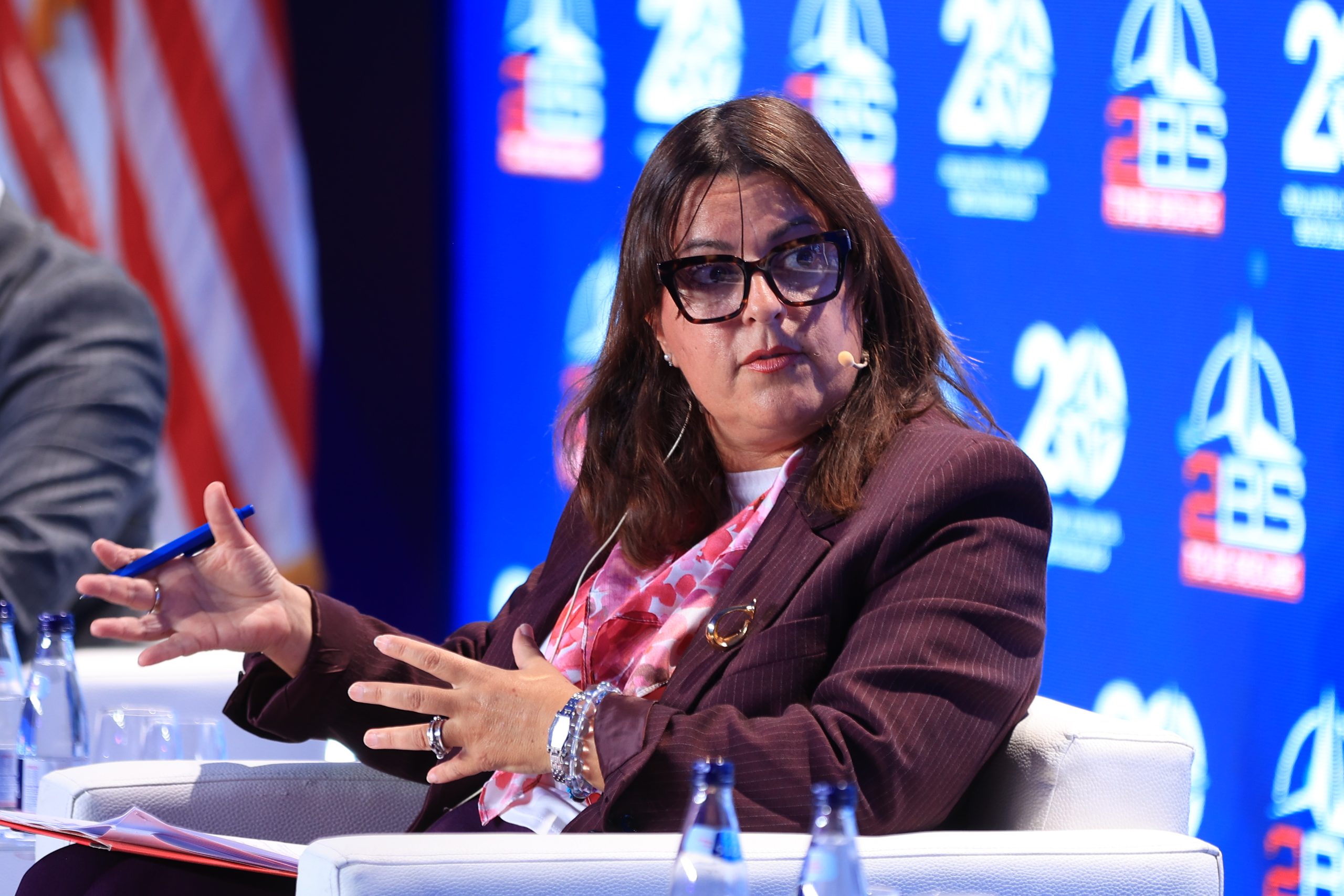
Montenegro’s Minister of Culture and Media, Tamara Vujović, said that combating disinformation was a global challenge and that fact-checking often lagged behind the spread of false information. She stressed that this was not a problem unique to Montenegrin society.
“It is up to institutions to make this work easier for the media and everyone concerned by providing additional information on whether particular narratives are being deliberately created, whether content has been generated using artificial intelligence, and whether a case involves isolated disinformation or forms part of a broader threat,” Vujović said.
She stressed that institutions aim to shorten the time between the emergence of disinformation and the publication of the first reliable information. She emphasised the importance of promptly communicating what can be verified while announcing that further information will be provided as soon as it becomes available.
Vujović also highlighted the responsibility of both the media and institutions in this process.
“It is our responsibility to shorten the period between the emergence of disinformation and the publication of the first reliable information. We can immediately communicate what we are able to verify and indicate when further information will be released, allowing us to respond to disinformation in real time,” the minister said.
She recalled that the Media Law requires journalists to exercise due professional care, while institutions are responsible for providing newsrooms and the public with additional information to help them identify the nature of disinformation, determine whether content was generated by artificial intelligence, and assess whether an incident is isolated or part of a wider campaign.
Discussing the European regulatory framework, the minister said Montenegro had adopted the Digital Services Act (DSA), which will begin to apply when the country joins the European Union. Until then, she said, preparations must be made to establish a system that enables a faster response to disinformation, both through the development of software solutions and improved communication between the relevant institutions and other stakeholders.
She particularly emphasised the importance of coordination with major digital platforms, noting that establishing an appropriate cooperation mechanism would be essential for responding more effectively to the spread of disinformation.
Vujović said the government was working to create a system that would strengthen the country’s resilience to disinformation without undermining media freedom and independence.
“Boundaries must be clearly defined by law, through the powers and limitations governing what each party can do. We have no right to declare our own views the only correct interpretation of events, because criticism of the government is an integral part of political life. Our package of media laws includes a range of measures designed to protect freedom of expression,” Vujović said.
Speaking about artificial intelligence and its regulation, Dukaj announced that Montenegro’s AI strategy would be completed by the end of the year. He also acknowledged a shortage of experts in the field.
“I have been looking for an AI expert for months and cannot find one, so we will have to bring in experts from abroad,” Dukaj said.