
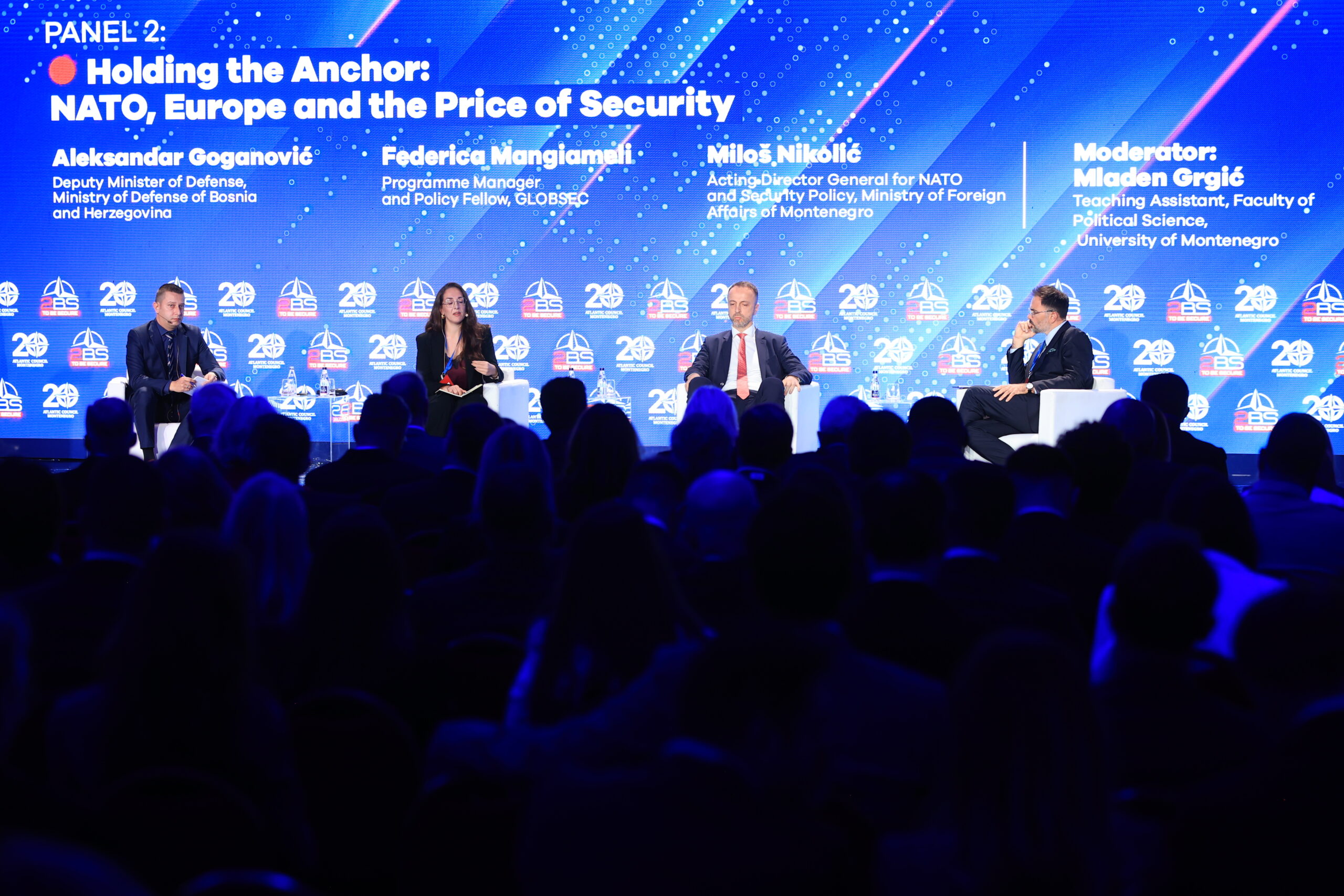
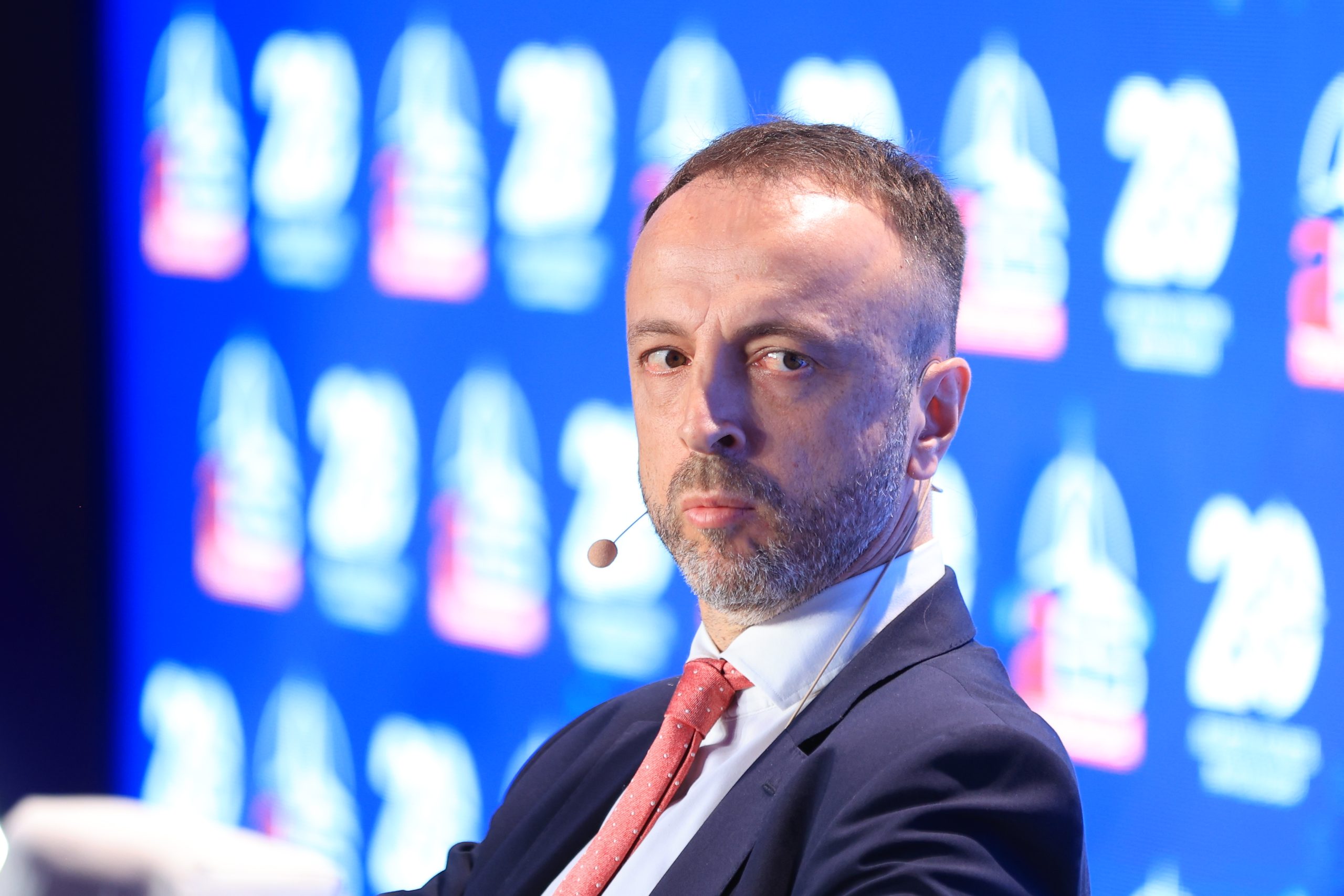
All European countries are facing hybrid activities by foreign actors, and Montenegro is no exception. The situation is further complicated by the fact that this influence comes not only from Russia but also from the region, said Miloš Nikolić, Acting Director General for NATO and Security Policy at Montenegro’s Ministry of Foreign Affairs, speaking at the 2BS Forum panel entitled “Holding the Ground: NATO, Europe and the Price of Security.”
Nikolić said that the expulsion of members of the “Rybar” propaganda network, which had planned to spread disinformation about the decision to introduce visas for Russian citizens, demonstrated that Montenegro is continuously exposed to hybrid threats.
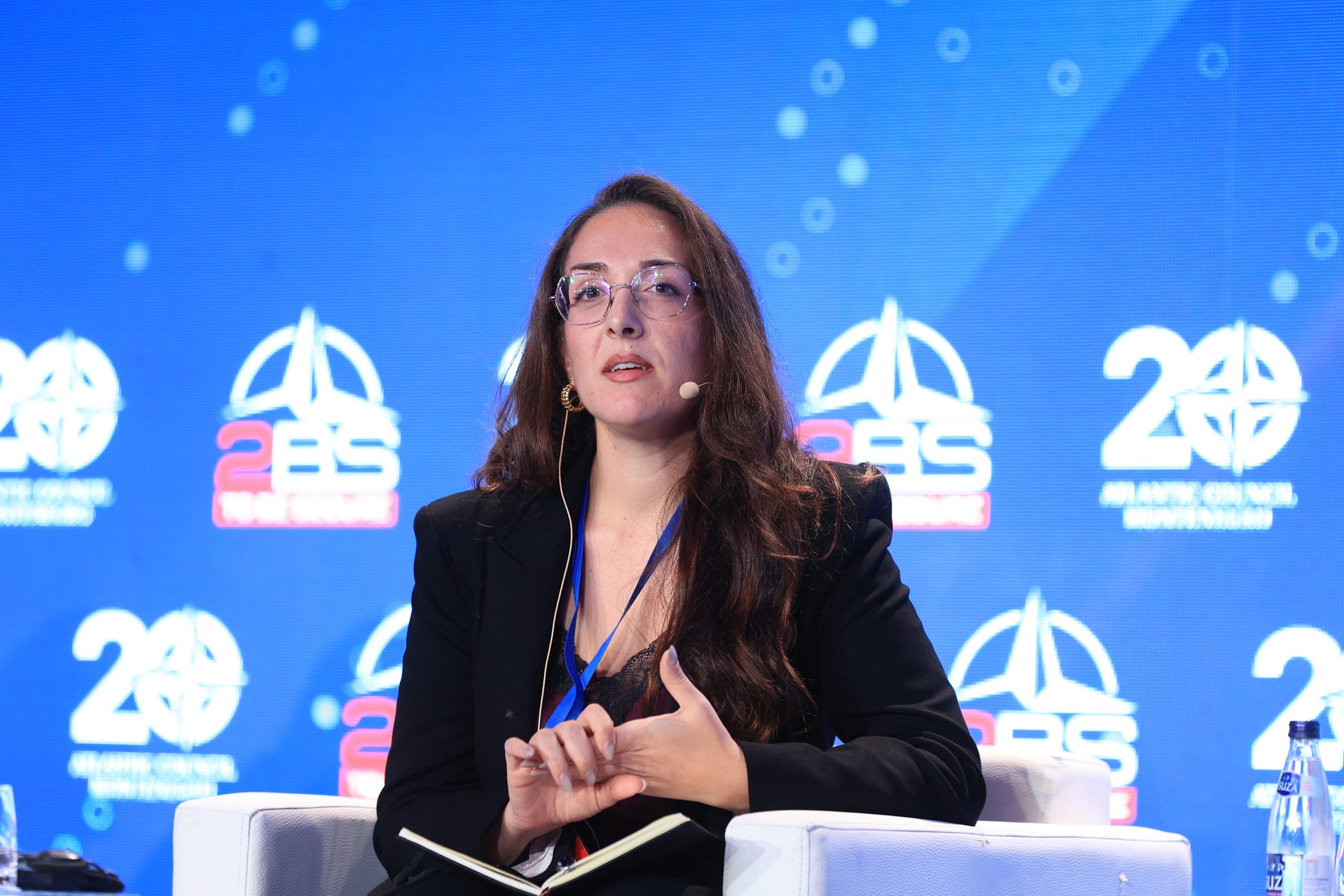
Federica Mangiameli, Programme Manager and Public Policy Fellow at GLOBSEC, assessed that Europe is entering a new phase of security policy in which it will have to take greater responsibility for its own defence due to changes in US foreign policy.
She noted that the US demand for European NATO members to increase defence spending is not new, but has become more pronounced.
“Although American support will remain crucial in areas such as nuclear deterrence, intelligence sharing, command and control, and air capabilities, Europe must accelerate the development of its own military capabilities,” Mangiameli said.
Mangiameli stressed that the credibility of European defence would be measured not only by promised spending but also by tangible results, including ammunition production, stronger logistics and the development of military capabilities. She also pointed out that a reduction in the US military presence in Europe would mean that European countries must assume some of the responsibilities previously carried by the United States.
According to her, an additional challenge is that American support increasingly depends on allies’ willingness to contribute to US military operations, including by providing logistical support and access to military bases.
“The key question for Europe is not whether it can develop the necessary defence capabilities, but how quickly it can do so. The international security order is changing irreversibly, and European countries must prepare for a prolonged period of instability, while continuously increasing defence investment and strengthening the European defence industry,” Mangiameli said.
Asked how long Ukraine could withstand the war without American assistance, Mangiameli assessed that any further reduction in US support, particularly in intelligence and satellite capabilities, could seriously weaken Ukraine’s defensive capacity and lead to further loss of life. At the same time, she warned that this dependence represents a long-term security challenge for Europe as well, requiring it to accelerate the development of its own capabilities.
Nikolić said that security comes at a cost and that defence investment can no longer be postponed. He noted that NATO members had agreed to increase defence spending, with the aim of raising expenditure on core defence requirements to 3.5 per cent of GDP by 2035, alongside additional investment in defence-related activities, bringing total spending to five per cent of GDP.
Speaking about Montenegro’s contribution to the Alliance, Nikolić said that the country participates in NATO missions and operations, from Latvia and Bulgaria to the KFOR mission in Kosovo, contributing to collective efforts to maintain security across Alliance territory.
He emphasised that Montenegro’s contribution to NATO extends beyond troop numbers and defence spending, highlighting the importance of active participation in policymaking, particularly on issues concerning the Western Balkans.
“There are many areas in which Montenegro could be more active, both financially and at the political level. Nevertheless, I believe that what we have done over the past nine years demonstrates that we are an active participant and a responsible NATO member,” Nikolić said.
Addressing hybrid threats, which officials warn about on a daily basis, Nikolić said they have become part of everyday life throughout Europe, affecting every country without exception. He expects these threats to intensify as the next elections approach.
“We are seeing an escalation of hybrid attacks originating from Russia, and the same pattern of hybrid activity is evident. Montenegro is no exception, and our situation is further complicated by the fact that this hybrid influence comes not only from Russia but also from the region. The expulsion of members of the ‘Rybar’ propaganda network, which planned to spread disinformation about the decision to introduce visas for Russian citizens, demonstrates that Montenegro is continuously exposed to hybrid threats. In this context, we should also remember the elections and the process of joining NATO,” Nikolić recalled.
He added that hybrid attacks should not come as a surprise, but that the country is taking steps to improve its legislative and institutional framework for responding to them.
“In addition to the ‘Rybar’ case, we also had the Western Balkans summit in Tivat, and hybrid threats will continue to increase as we approach next year’s elections,” Nikolić said.
Aleksandar Goganović, Deputy Minister of Defence of Bosnia and Herzegovina, assessed that the country enjoys good cooperation with NATO, although relations have faced challenges in the recent past, primarily due to a lack of direct communication that occasionally led to misunderstandings.
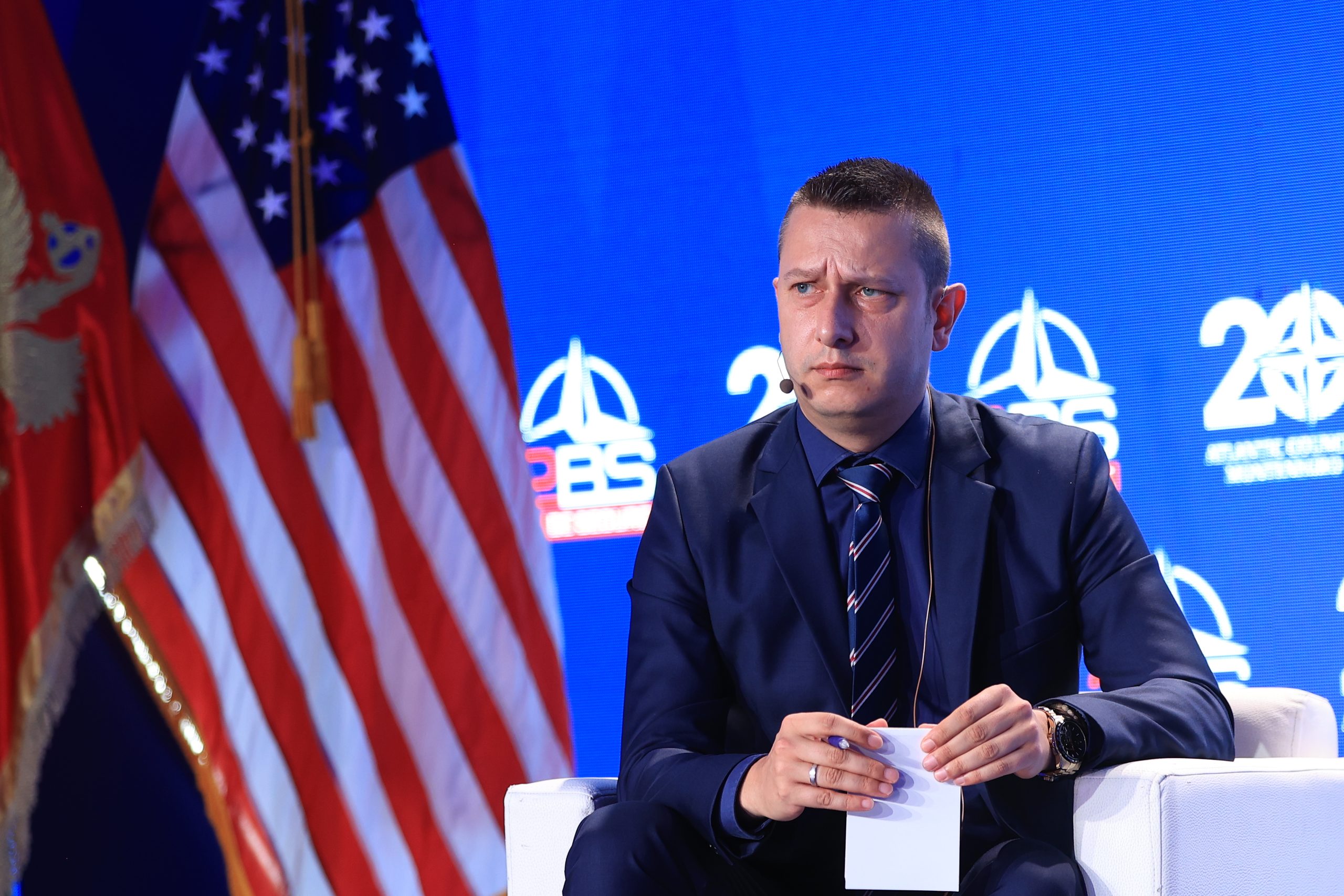
Goganović also emphasised the importance of adopting the Reform Programme, a document that establishes the framework for Bosnia and Herzegovina’s cooperation with the Alliance while helping strengthen the country’s defence capabilities, including its ability to assist citizens during natural disasters.
Regarding defence spending, he noted that Bosnia and Herzegovina currently allocates less than one per cent of GDP to defence, with approximately 92 per cent of the budget spent on employee salaries. He said that during a recent visit to NATO, a clear message was conveyed that an increase in the defence budget was expected, which, he added, would be one of the challenges in the period ahead.
According to him, progress depends partly on the formation of governments at the entity level in Republika Srpska and the Federation of Bosnia and Herzegovina, a prerequisite for establishing the Council of Ministers and opening discussions on the budget.
Reflecting on the country’s political and security situation, Goganović said that the responsibility shown by domestic leaders, together with the engagement of international actors, had helped prevent the political crisis from escalating into a security crisis. He stressed that preserving peace requires consistent respect for the Dayton Peace Agreement, something he expects from both domestic and international actors.
“A peaceful and stable Bosnia and Herzegovina contributes to peace and stability throughout the Western Balkans,” Goganović said.